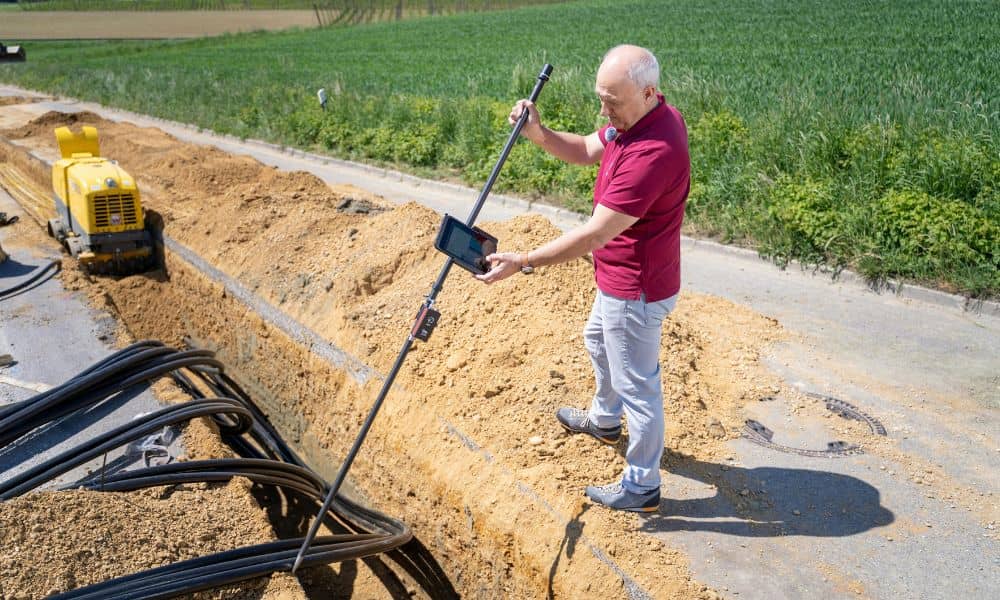
When news broke about a trench rescue at a construction site in Safety Harbor, many people in the construction world stopped and paid attention. A worker had become trapped during excavation, and emergency crews had to step in quickly. Thankfully, the situation did not end worse. Still, the incident raised an important question for builders across the Tampa area: what early steps help reduce risks like this before equipment ever hits the ground? One key answer is construction survey accuracy.
While a construction survey may not look dramatic, it plays a major role in how safely and smoothly a job site operates. In fact, many site problems begin long before excavation starts. They often trace back to layout errors, elevation mistakes, or missing control points.
Why the Safety Harbor incident hits close to home
Excavation work is always risky. Trenches can collapse, fill with water, or shift without warning. In Florida, these risks increase due to sandy soils and a high water table. Because of that, Tampa-area projects have very little room for error.
Although public reports do not point to a single cause in the Safety Harbor rescue, incidents like this remind us that excavation safety depends on many early decisions. One of the first is how the site is surveyed and laid out.
When survey data is off, excavation crews may dig deeper or wider than planned. As a result, soil stability changes fast. What looks safe on paper can become dangerous in the field.
What a construction survey really does on a job site
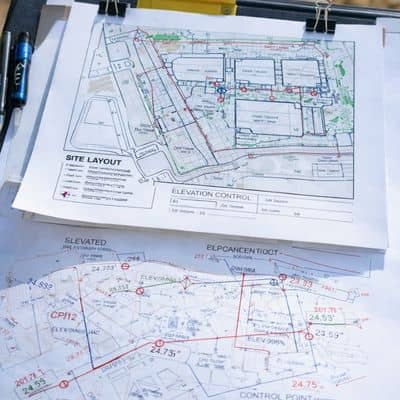
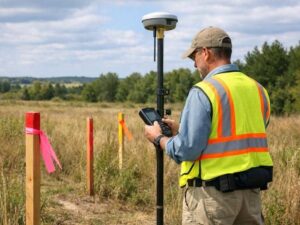
Many people think a construction survey just places stakes in the ground. In reality, it does much more than that.
A construction survey sets the foundation for the entire project. It defines:
- Where structures sit on the site
- How deep excavation should go
- Where slopes begin and end
- How drainage flows across the property
Because of this, every crew that follows depends on survey accuracy. If layout or elevation data is wrong, errors multiply as work continues.
For example, if excavation starts from an incorrect benchmark, crews may dig below safe levels. Over time, this can weaken trench walls and increase the chance of collapse.
How small survey errors can turn into serious safety risks
Survey mistakes do not need to be large to cause problems. Even small errors can create big consequences.
For instance, an elevation error of a few inches may not seem serious. However, in Tampa’s sandy soil, that extra depth can expose unstable layers. Water may seep in faster than expected, which puts pressure on trench walls.
In addition, incorrect horizontal layout can place trenches too close to existing utilities or structures. This raises the risk of cave-ins or damage during digging.
Because excavation happens fast, crews rely on survey data to guide them. When that data is wrong, safety suffers.
Why Tampa job sites need extra attention to survey accuracy
Tampa construction sites face challenges that many other regions do not.
First, the water table sits high across much of the area. Digging even a little deeper than planned can cause flooding in trenches. Second, sandy soils shift easily and need proper slope planning. Third, many projects take place on tight urban lots with limited space for error.
Because of these conditions, survey accuracy becomes even more critical. A precise construction survey helps contractors plan safe excavation depths and proper shoring from the start.
Without it, crews react to problems instead of preventing them.
Construction survey accuracy vs. “good enough” layout
Some projects try to save time or money by rushing site layout. Others rely on old data or partial surveys. While this may seem harmless, it often leads to costly outcomes.
When layout errors surface mid-project, work stops. Crews must wait while issues get corrected. In the meantime, schedules slip and costs rise.
More importantly, safety risks increase. Workers may enter trenches that were never meant to be that deep or wide. At that point, even strong safety plans struggle to keep up.
In contrast, an accurate construction survey reduces surprises. It gives crews clear guidance before excavation begins, which helps them work with confidence.
The surveyor’s role in job site safety
Construction surveyors do not replace safety officers. However, they support site safety in important ways.
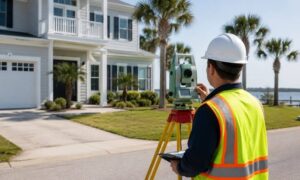
By confirming grades and elevations early, surveyors help crews plan excavation correctly. By maintaining clear control points, they ensure work stays aligned as the project moves forward. By coordinating with engineers, they help translate plans into real-world conditions.
As a result, surveyors become part of the safety chain. When survey data is solid, crews can focus on doing their jobs safely instead of fixing mistakes.
What contractors should ask before excavation
Before breaking ground,contractors and developers should ask a few key questions:
- How were site elevations verified?
- How often will control points be checked during construction?
- How does the construction survey account for local soil and water conditions?
These questions are not about adding cost. Instead, they help manage risk early, when changes are easiest and cheapest.
Lessons Tampa can take from the Safety Harbor rescue
The Safety Harbor trench rescue serves as a reminder that construction safety starts long before an incident occurs. While many factors affect excavation safety, accurate construction surveys play a quiet but critical role.
In a region like Tampa, where soil and water create constant challenges, precision matters. A reliable construction survey sets the stage for safer excavation, smoother schedules, and fewer surprises.
In the end, survey accuracy is not just about lines on a plan. It is about protecting workers, keeping projects on track, and building with confidence from day one.