Finding property lines on an older property isn’t always straightforward, especially when the markers are gone. It can leave you guessing where your land actually ends. Here’s how to figure it out and when it makes sense to call a surveyor.
How Do You Find Property Lines When Markers Are Missing?
You can find property lines by checking your deed, reviewing old survey records, and looking for physical clues on your land. The only accurate way is to hire a land surveyor who can measure the property and place new markers using modern tools.
Older homes in Pensacola often don’t have clear markers anymore. You walk the yard and expect to see metal pins or corner stakes. Nothing shows up. That’s normal for older properties.
Over time, markers get buried, removed, or shifted. What you see today may not match the true boundary.
Why Property Lines Are Harder to Find on Older Properties
Older properties come with a few problems that newer homes don’t have.
Outdated Survey Methods
Many homes in Pensacola were surveyed decades ago. Back then, tools were less precise. Measurements could be off by inches or even feet.
Today’s surveys use GPS and digital equipment that can measure within a fraction of an inch.
Missing or Buried Markers
Markers don’t last forever.
- Metal pins rust or sink into the ground
- Yard work can remove them
- Construction can cover them
After years, they disappear without anyone noticing.
Coastal Soil Movement
Pensacola sits near the coast. Soil shifts slowly over time.
Rain, erosion, and moisture can move the ground just enough to hide or shift markers. What used to be visible may now sit inches below the surface.
What Most Homeowners Try First And Why It Fails
People usually try the fastest option first. That’s where problems start.
Online GIS Maps
County maps look helpful, but they are not exact.
They can be off by several feet. Most counties even label them as “not for legal use.” They work for a rough idea only.
Old Survey Documents
You might find a survey from when the home was bought.
That helps, but conditions change. Trees get removed. Fences move. Driveways get added. The drawing may no longer match the land.
Fences and Yard Lines
Many assume the fence marks the boundary.
It often doesn’t.
Fences get placed for convenience, not accuracy. Some sit inside the line. Others cross into the next property.
Steps to Find Property Lines Without Visible Markers
You can still gather useful clues before calling a surveyor.
Check the Legal Description
Your deed includes a legal description.
It may list distances, directions, or lot numbers. It’s not easy to read at first, but it shows how the property was defined.
Look for Physical Clues
Walk your yard slowly.
Look for:
- Changes in grass or soil
- Old tree lines
- Edges of driveways or walls
These don’t prove the boundary, but they can point you in the right direction.
Compare Neighboring Lots
Nearby homes often follow a pattern.
If driveways and fences line up in a certain way, your property may follow the same layout. Still, this is only a rough guide.
Why Missing Property Markers Can Cause Problems
Small mistakes turn into expensive ones fast.
- A shed may cross into a neighbor’s land
- A fence may sit outside your boundary
- Buyers may question your property limits
- Disputes can lead to legal costs
Boundary issues are one of the most common property conflicts in the U.S. Most of them come down to unclear lines.
Property Line Challenges on Older Properties
Some local conditions make this harder than usual.
Older Subdivision Layouts
Many neighborhoods were built years ago.
Some layouts don’t match modern mapping systems perfectly. That creates small gaps between records and reality.
Coastal Conditions
Moist soil and weather changes affect the ground.
Over time, this can shift or hide markers completely.
Long-Term Property Changes
Older homes go through many updates.
Driveways get moved. Fences get replaced. Landscaping changes. Each change makes the original boundary harder to spot.
Signs Your Property Lines May Be Wrong
Watch for these red flags:
- Your fence doesn’t line up with nearby properties
- You and your neighbor disagree on a boundary
- A structure sits close to the edge of your yard
- No markers are visible anywhere
If you notice even one of these, don’t guess.
What Is the Most Accurate Way to Find Property Lines?
Hire a Professional Land Surveyor
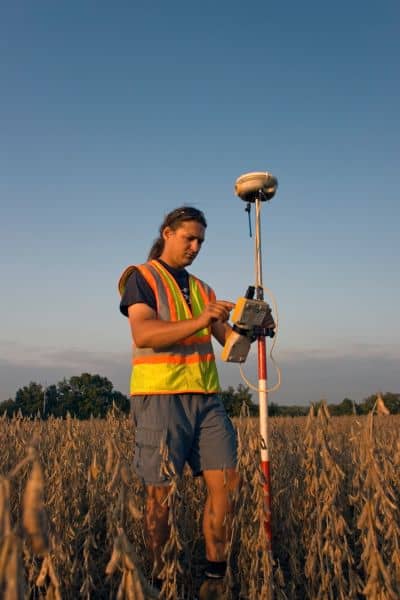
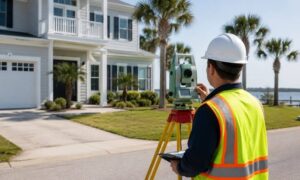
A land surveyor gives you a clear answer.
They follow standards like the ALTA/NSPS Land Title Survey Standards to ensure accuracy and consistency.
Here’s what they do:
- Review legal records and past surveys
- Measure the land using modern equipment
- Locate or reset missing markers
- Mark the exact corners on your property
Modern tools can measure within a very small margin, often within hundredths of a foot. That level of accuracy removes guesswork.
What the Survey Process Looks Like
The process is straightforward.
First, the surveyor studies records and maps. Then they visit the property and take measurements. After that, they place markers at the correct corners. Finally, they provide a survey drawing that shows your boundaries.
You get both physical proof and a document you can use later.
Why You Should Confirm Property Lines Before Building
Any project near the edge of your property carries risk.
- Fence installation
- Driveway work
- Shed placement
- Landscaping upgrades
One mistake can mean tearing everything down and starting over.
Clear boundaries remove that risk.
FAQs
How do I find property lines without markers?
Check your deed, old surveys, and physical clues, but a surveyor gives the only accurate result.
Are GIS maps accurate for property lines?
No. They are estimates and not legally reliable.
Do I need a survey before building a fence?
Yes. It helps avoid building on the wrong property.