You plan to add a driveway or widen the one you already have. At first, it feels like a simple upgrade. You picture easier parking, smoother access, and better use of your space. However, once you start looking into permits, things can quickly become confusing. The city may ask for a plat of survey.
Suddenly, you’re looking at a drawing filled with lines, numbers, and labels that don’t make much sense. It’s not always clear what you’re supposed to take from it, or how it connects to your driveway plans. But once you begin to understand what it shows, you start to see why it matters. Some of those lines can actually limit where your driveway can go—or whether you can expand it at all.
So before you move forward, it’s worth taking a closer look at your plat of survey and seeing what’s really there.
What a Plat of Survey Tells You About Your Property
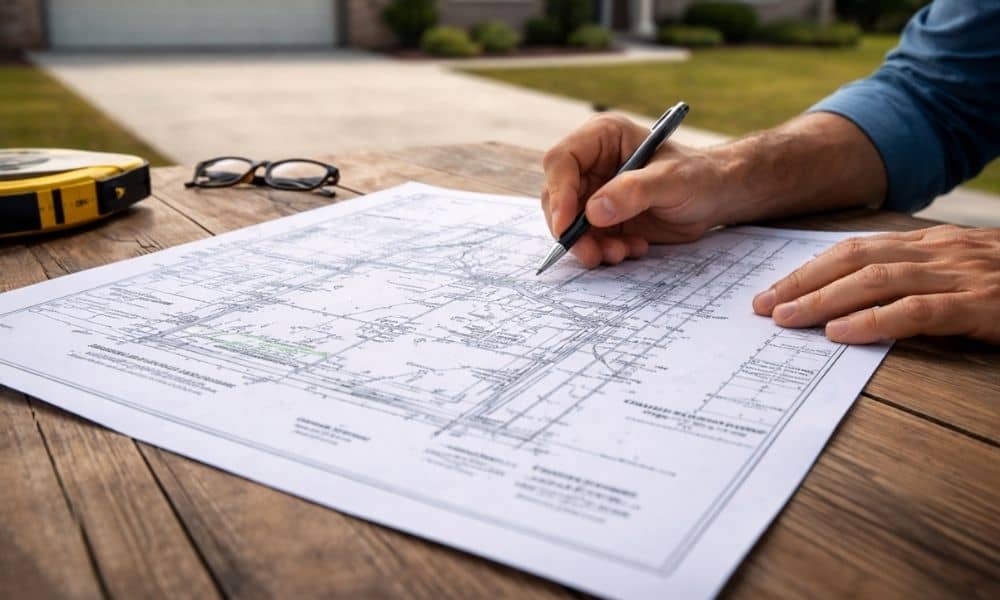
A plat of survey is more than just a map. It is a detailed drawing created by a licensed land surveyor that shows the true layout of your lot. While it may look technical at first, it actually answers simple questions about your property once you spend a little time with it.
When you’re looking at the plat of survey for your property, the layout starts to make more sense. You can see where your land begins and ends, along with areas that may come with limits. Some parts of your yard might look open and usable, but the drawing can point out lines or zones that affect what you can actually build there.
Because of this, the plat is the document the city relies on when reviewing your plans. Online maps, on the other hand, often miss these details. They can give you a general idea, but they should not guide your final decisions.
Why Driveway Projects Near the Street Get Complicated
Most driveway work happens at the front of the property. That is exactly where the most restrictions exist.
Even if your yard looks wide open, the area near the street often includes space that is not fully under your control. For example, part of that space may belong to the city, even though it looks like your lawn. In addition, utilities may run under that same area, even if you cannot see them.
Because of this, many homeowners plan a driveway that seems perfect on paper but runs into problems during approval. The issue is not the idea—it is the location.
That is why reading your plat of survey matters so much before you start.
How to Understand the Layout Without Overthinking It
When you look at your plat for the first time, it may feel overwhelming. However, once you know what to focus on, it becomes much easier to read.
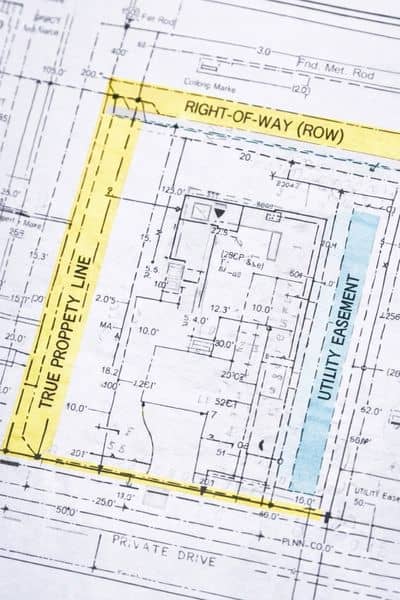
Start by finding the edge of your property along the street. This line marks your actual boundary. However, it may not match what you see in real life. The curb, the sidewalk, or even the edge of the road may sit outside your true property line.
Then, you may notice another area between your boundary and the street. This is often a right-of-way. Even though it looks like part of your yard, it is usually controlled by the city. Because of that, placing a driveway too far forward can create a problem.
At the same time, you may see areas marked for utilities or drainage. These are called easements. Even if nothing is visible on the surface, these areas still have rules. So if your driveway crosses one of them, you may need to adjust your plan.
You may also notice spacing rules that limit how close your driveway can be to certain lines. These limits affect how wide or where you can place it. As a result, your design needs to work within those boundaries.
Once you see how all these parts connect, the drawing starts to make sense.
Why Many Homeowners Get It Wrong the First Time
Even though the plat shows everything clearly, many people still make the same mistakes.
For example, some assume the curb marks the edge of their property. Others believe that if nothing is visible, there are no restrictions. In many cases, homeowners rely on online maps instead of the actual plat.
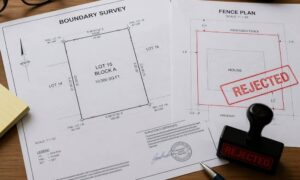
As a result, they move forward with a plan that looks fine at first but does not meet real property limits. Then, when the city reviews the project, it gets rejected.
This leads to delays, extra costs, and frustration that could have been avoided.
Why Online Maps Are Not Enough for This Decision
It is easy to pull up your property on a map and think you understand your lot. However, these tools are not designed for construction decisions.
They often show general outlines, but they may miss key details. They may not show exact measurements, hidden easements, or the full extent of the right-of-way.
Because of this, relying only on online maps can lead you in the wrong direction. In contrast, a plat of survey gives you the accurate and complete picture you need.
When It Makes Sense to Get an Updated Plat
Sometimes, the plat you have is outdated or unclear. In that case, it may not reflect your current property conditions.
If you notice missing details, unclear markings, or changes around your property, it may be time to get an updated version. This is especially important if your driveway project sits close to the street or near areas with possible restrictions.
Getting a clear and current plat helps you avoid guesswork and move forward with confidence.
How Reading Your Plat Early Helps Your Project Succeed
Taking the time to review your plat of survey before planning your driveway can save you from major setbacks.
Instead of guessing, you can see exactly where your driveway can go. You can plan within the limits of your property. You can avoid designs that would get rejected later.
As a result, your project moves faster and with fewer problems.
Final Thoughts
Adding or widening a driveway may seem like a small project. However, the area where that work happens often comes with rules that are not easy to see at first.
That is why your plat of survey is so important.
It shows the true layout of your property and the limits that come with it. More importantly, it helps you make smart decisions before you start building.
So before you begin your driveway project, take a closer look at your plat. It may look simple, but it holds the key to getting your project done right the first time.