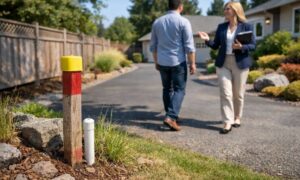
If you’ve ever woken up to find a big sign or utility box planted on your front lawn, you’re not alone. A recent viral post on r/Jacksonville started with one frustrated homeowner saying, “The city put a giant sign on my yard without warning.” The comment section filled up fast—with hundreds of locals asking how the city could do that on private property. What many people don’t realize is that the answer usually lies in a due diligence survey.
This document—often overlooked after closing—can show exactly where your rights end and where the city’s begin. It’s not just for people buying land; in Jacksonville, it’s also something every homeowner should understand, especially if you plan to build, landscape, or even just know what you actually own.
When “Your Yard” Isn’t Fully Yours
The Reddit story struck a nerve because it felt unfair. After all, homeowners pay property taxes, mow their grass, and maintain that space. Yet, under the surface—or sometimes right through it—may be something called an easement.
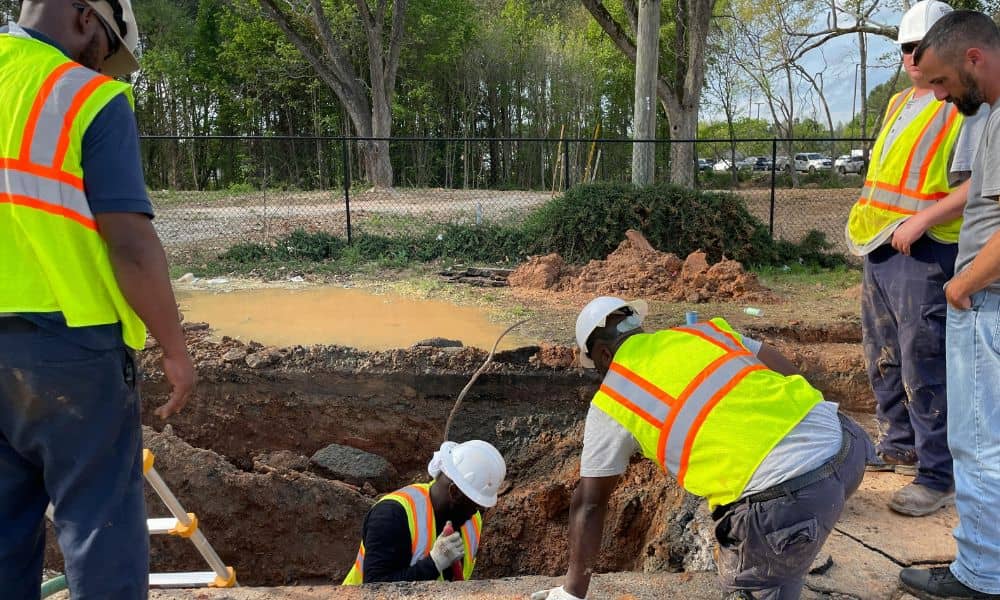
An easement gives the city, a utility company, or another party the legal right to access a strip of your land. They can dig, install, or maintain infrastructure like power poles, drainage systems, or water lines there. You still “own” the land, but you can’t stop them from entering it or restrict what’s allowed within those few feet.
That means if JEA needs to service underground lines or the Jacksonville Transportation Authority adds new signs or cables, they can legally step onto that part of your property without asking permission. The key is knowing where that right-of-way actually is—and that’s what a due diligence survey reveals before surprises happen.
How a Reddit Rant Turned Into a Lesson
The viral thread didn’t just expose one person’s problem—it highlighted how common this misunderstanding really is. One commenter said their new fence had to be torn down because it crossed a drainage easement. Another shared how a shed they built on the “edge” of their lot had to be moved when a crew came through to install fiber cables.
Every one of those headaches could’ve been avoided if the homeowner had reviewed their survey—or ordered an updated one before building. Unfortunately, most people file it away after closing and never look at it again.
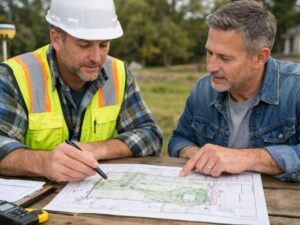
A due diligence survey shows not just boundaries but also easements, encroachments, and rights-of-way. It literally maps the invisible lines that define what’s yours to use and what’s shared. If the Reddit poster had checked theirs, that “city sign” moment wouldn’t have come as a shock.
Reading Between the Lines—Literally
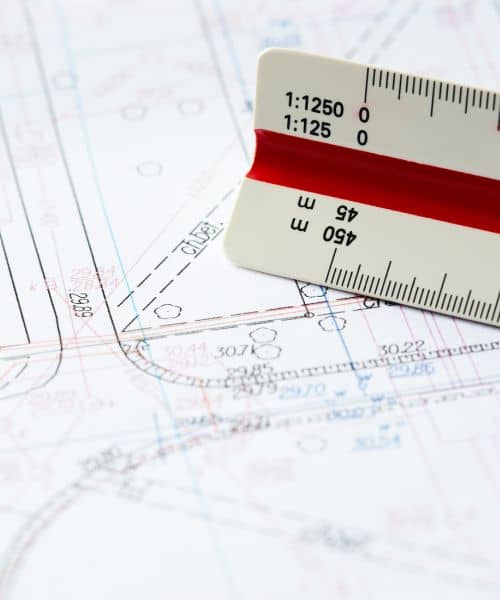
Let’s be honest: most survey plats look like a mess of lines and abbreviations. But once you know what to look for, it’s surprisingly simple.
On your survey, you might notice codes like U/E (Utility Easement), D/E (Drainage Easement), or R/W (Right-of-Way). These are small, shaded, or hatched zones running along your property lines or across the corner of your lot. They tell you who has access and for what reason.
The trick is understanding that those spaces can’t be permanently blocked. So, if you’re planning a fence, pool, or retaining wall, you’ll want to check those sections first. It doesn’t mean you can’t use that land—it just means you can’t build something that would interfere with the easement’s purpose.
Think of it like a shared driveway. You may not use it every day, but someone else has a right to when they need to.
Why Homeowners Should Care Right Now
This isn’t just a one-off story. Jacksonville is growing fast, and infrastructure projects are everywhere—from sewer upgrades to fiber-optic installations. JEA and the city have been expanding service routes across neighborhoods like Riverside, San Marco, Arlington, and the Beaches.
That’s great for development, but it also means more easement activity. If your property sits along an older line or near a planned upgrade, there’s a chance work crews might need to enter part of your yard. The city isn’t required to give you long notice if the easement is already recorded.
A quick due diligence survey can help you spot these areas before they become issues. It can also tell you whether your fence, driveway, or even landscaping sits inside a utility zone. The sooner you know, the easier it is to adjust plans or document what’s at risk.
Inside the Surveyor’s World
One overlooked detail in the Reddit discussion was how many surveyors chimed in to explain what goes on behind the scenes. A recent thread on r/Surveying shared how field crews are swamped with demand—especially as homeowners, developers, and lenders rush to close projects.
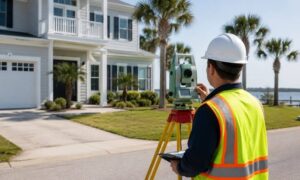
That pressure often leads clients to expect a same-day turnaround, which just isn’t realistic. A proper due diligence survey takes time. It involves researching deeds, pulling city plats, checking old right-of-way records, and verifying property corners on site. Cutting corners can mean missing an easement or making a costly mistake.
When homeowners understand that process, they tend to value accuracy over speed. The goal isn’t just to draw lines—it’s to make sure those lines hold up legally and practically for years.
What to Do If You Already Got “The Sign”
If you’re one of those unlucky homeowners who’s discovered a new pole, box, or sign in your yard, don’t panic. There’s still a clear path forward.
First, dig up any old surveys from your closing documents. If it’s more than a decade old—or your property has changed since—order a new due diligence survey. Next, check Duval County’s online property records to see which easements are officially recorded. That’ll tell you who has access and for what reason.
Once you know, contact a licensed land surveyor. They can confirm the exact limits of that easement and advise whether any part of your yard is still fully private. Sometimes, what looks like city overreach is just the easement doing its job. Other times, it’s a mistake worth disputing—and your updated survey will be your best proof.
Don’t Wait for the Next Surprise
It’s easy to assume your property is 100% yours, but easements don’t disappear after the sale. They’re part of your deed, tied to the land forever. The problem is that most homeowners never notice them until they cause a real-world problem—like a torn-down fence or an unexpected sign.
A due diligence survey gives you a full picture of your property, even years after you buy it. It’s your safeguard against confusion, frustration, and unnecessary repairs. In growing cities like Jacksonville, that kind of clarity isn’t just nice to have—it’s essential.
Final Takeaway
The viral Reddit post might’ve started as a rant, but it turned into a reminder every homeowner needs. Your land might look simple on the surface, but invisible legal boundaries run underneath it.
Before you build, landscape, or assume you’ve got the full run of your yard, take another look at your survey—or order a fresh due diligence survey. It’s a small investment that protects your biggest one.