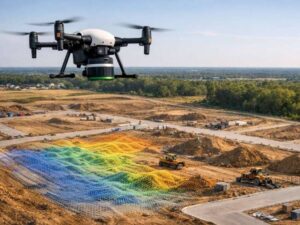
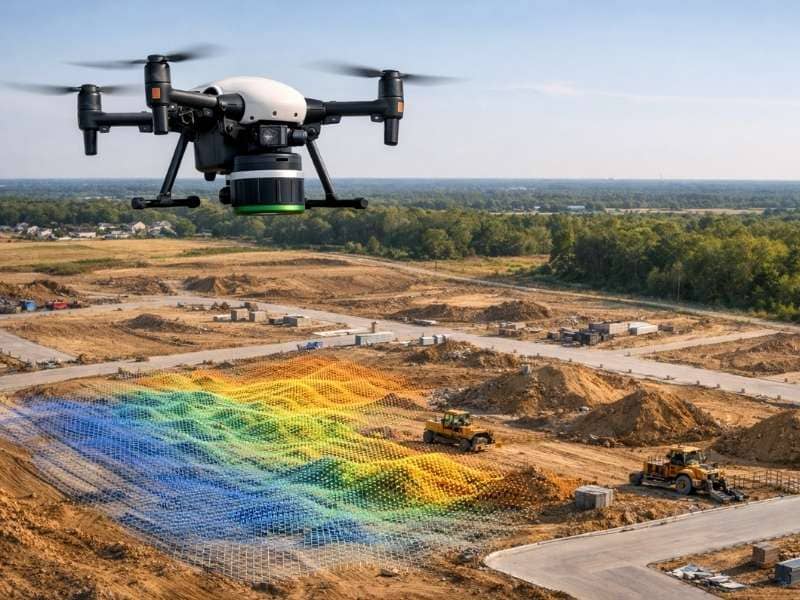
If you’ve driven past a construction site and noticed a drone flying overhead, it may have been collecting LiDAR data. LiDAR stands for Light Detection and Ranging. It is one of the most useful tools in land surveying today. And in a fast-growing city like Jacksonville, more people are using it every year.
This article covers how LiDAR mapping is used, what it can do that regular surveying cannot, and why it now matters for land projects, flood maps, and property decisions across Duval County.
What LiDAR Mapping Does
LiDAR works by firing laser pulses from a drone or plane toward the ground. A sensor records how long each pulse takes to return. By collecting millions of these readings at once, the system builds a detailed 3D map of the land below.
One big advantage is what LiDAR can see through. In areas with lots of trees, a normal aerial photo only shows treetops. LiDAR goes through the canopy and records the actual ground below. This is very useful in wooded areas and wetlands, which are common across Duval County and nearby regions.
LiDAR also measures elevation across large areas faster than ground crews can. A single drone flight can cover hundreds of acres. The data it produces can be accurate to within 5 to 10 centimeters. Engineers need that kind of detail when they design drainage systems, plan road grades, or model how water moves across a site.
How LiDAR Changed Jacksonville’s Flood Maps in 2024
One of the biggest effects LiDAR has had on Jacksonville property owners happened in 2024. New flood maps for Duval County came out in late March 2024. These maps used updated LiDAR data, giving FEMA a much clearer picture of ground levels across the city than older maps had.
The change mattered. Some homes and lots that were not in a flood zone before were moved into one. Others had their flood zone label changed entirely. This affects flood insurance costs, mortgage rules, and what you can build on your land.
LiDAR is no longer just for big engineering projects. It now affects regular property choices in Jacksonville. If your land was remapped using new LiDAR data, it is worth checking your flood zone status before you buy, build, or make changes to your property.
Where LiDAR Is Being Used
Jacksonville has one of the biggest land areas of any city in the United States. Its mix of urban neighborhoods, coastal zones, wetlands, and fast-growing suburbs makes it one of the more challenging places in Florida for land work. Here are the main ways LiDAR mapping is being used.
Road and Transportation Projects
Planning roads across Jacksonville takes accurate elevation data over long distances. LiDAR lets engineers check grades and drainage paths without sending crews into every wooded or wetland section. That saves a lot of time on large road projects.
Stormwater and Drainage Design
Flooding is a regular problem in Jacksonville. Areas near the St. Johns River and the coast flood often during heavy rain and high tides. Engineers use LiDAR elevation data to see where water pools and where drainage systems need to go. This kind of planning was much harder before accurate LiDAR data was easy to get.
Utility Corridor Mapping
Jacksonville keeps adding water lines, sewer pipes, power lines, and phone networks. LiDAR helps planners map existing conditions and spot terrain problems before crews go out into the field. That reduces wasted time and lowers the chance of surprises during construction.
Land Development and Site Planning
Builders working on large sites in areas like Nocatee, the Westside, and Northeast Jacksonville use LiDAR early in the planning stage. It shows them the terrain, existing trees, drainage paths, and wet areas before they settle on a layout. That early information helps them decide where to put buildings and how to handle grading and drainage.
LiDAR Mapping vs. Traditional Ground Surveying
LiDAR does not replace ground surveying. It works alongside it.
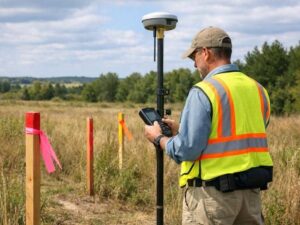
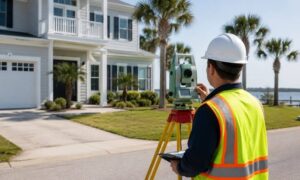
For a small home lot, a standard boundary survey by a licensed PSM is still the right choice. LiDAR adds the most value on large sites where walking the whole area would take too long, or where plants and trees block normal measurement tools.
Even when LiDAR is used on a project, a licensed surveyor still needs to set legal boundary lines, place control points, and sign off on the final documents. LiDAR data alone is not a legal survey. It has to be included in a document signed and sealed by a licensed Professional Surveyor and Mapper.
LiDAR data also has a time limit. The 2024 Jacksonville flood map update happened because old data no longer matched real ground conditions after years of new development. If a project uses LiDAR data that is several years old, it may not be good enough for engineering work or permit applications.
What to Ask Before Using LiDAR Data on a Jacksonville Project
Not all LiDAR data is the same. Before using it for a project, ask these questions.
When was it collected? Terrain in Duval County changes as new development spreads. Old data may not show current ground conditions.
What quality level is it? The USGS ranks LiDAR by quality level. Quality Level 1 is the most accurate. It is what Florida used for its recent statewide mapping work. Lower levels are fine for general planning but may not meet the standards needed for detailed permits or FEMA work.
Has it been checked against real ground measurements? LiDAR is most reliable when a licensed PSM has verified it using actual ground control points. That step confirms the data is accurate before it is used in a certified survey product.