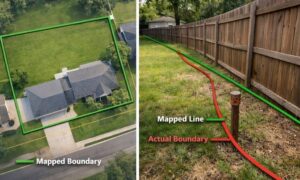

If you’re planning to build or improve your property, you probably expect some delays. That’s normal. However, many homeowners run into a frustrating problem they didn’t see coming. Their plans get sent back by the city, even though everything looks ready. In many cases, the issue isn’t the design. Instead, the real problem is missing or incomplete site data. That often means the topographic survey data wasn’t collected or included the right way.
At first, that may not seem like a big deal. But once your permit gets delayed, it quickly becomes one.
Why Permit Delays Often Start Before You Submit Anything
Most people think permit issues happen after submission. In reality, they often begin much earlier. When plans are created without accurate land data, small errors get built into the design.
As a result, when the city reviews your plans, those errors become obvious.
For example, the layout might not match the actual ground. Or the elevations may not reflect the real slope of the land. Because of that, reviewers cannot confirm if your project follows local rules. So instead of approving it, they ask for revisions.
That back-and-forth can take weeks. Meanwhile, your project stays on hold.
What a Topographic Survey Actually Tells You About Your Land
A topographic survey gives a clear picture of what your land really looks like. When you look at a topographic survey for your property, you can see the elevation, slope, and all the physical features laid out in a way that makes sense.
This matters because every design depends on those details.
If your land is uneven, your plans need to reflect that. If there are existing features like driveways or structures, those must be included. Otherwise, the design won’t match reality.
Because of this, a topographic survey helps your plans line up with what actually exists on site.
How Missing Survey Data Creates Problems During Review

When survey data is missing or incomplete, plans rely on rough estimates. That might seem fine at first. However, those small guesses often lead to bigger problems later.
During review, the city checks if your design fits the site. If something looks off, they will question it.
For instance, if elevation points are unclear, they can’t confirm how your structure will sit on the land. If site features are missing, they can’t verify spacing or placement.
Because of that, your plans get flagged. Then you have to go back, fix the data, and resubmit everything.
Why Accurate Site Data Matters More in Panama City
Panama City has its own set of challenges. The land is often flat, but that doesn’t mean it’s simple. Small elevation changes can affect how a project performs.
In addition, local rules require clear and accurate site information. Reviewers need to understand how your project fits the property before they approve it.
Because of this, even minor gaps in data can slow things down.
That’s why a topographic survey plays such a key role. It gives everyone involved—designers, engineers, and reviewers—the same clear understanding of the land.
What Happens When Plans Don’t Match the Actual Site
When plans don’t reflect real conditions, problems show up quickly.
First, reviewers may reject the submission or request more details. Then, designers have to update drawings. After that, the revised plans go back through review again.
Each step adds more time.
At the same time, costs can increase. Changes to plans often mean extra work for designers and engineers. In some cases, contractors also have to adjust their approach.
All of this could have been avoided with accurate survey data from the start.
Why Starting With a Topographic Survey Makes the Process Smoother
When you begin with a topographic survey, everything else becomes easier.
Designers can create plans based on real conditions. Engineers can make accurate decisions. And most importantly, the city can review your submission without guessing.
Because of that, approvals tend to move faster.
Instead of going back and forth, your project moves forward.
When Homeowners Usually Realize They Needed One
Many homeowners only realize they need a survey after a problem comes up. They submit plans, get feedback, and then hear that more site data is required.
At that point, they have no choice but to pause and go back.
However, by then, time has already been lost.
That’s why it’s better to handle this step early. Getting a topographic survey before designing or submitting plans helps avoid that delay altogether.
How to Avoid Permit Problems From the Start
The best way to avoid issues is simple. Start with accurate information about your land.
That means working with a licensed land surveyor who understands local requirements. Someone with experience in Panama City will know what kind of data is needed for permits.
Because of that, your plans will be built on solid information from the beginning.
Final Thought
Permit delays can feel frustrating, especially when you’re ready to move forward. However, many of those delays come from something preventable.
When your plans rely on incomplete or missing data, problems are almost guaranteed.
On the other hand, when you start with a complete topographic survey, you give your project a strong foundation. Your plans match your land, your submission makes sense, and your approval process becomes much smoother.
So before you design, submit, or build, take that first step.
Make sure you truly understand your land.