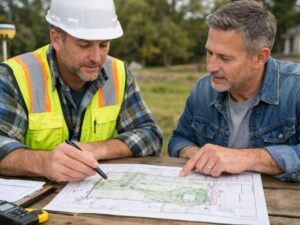
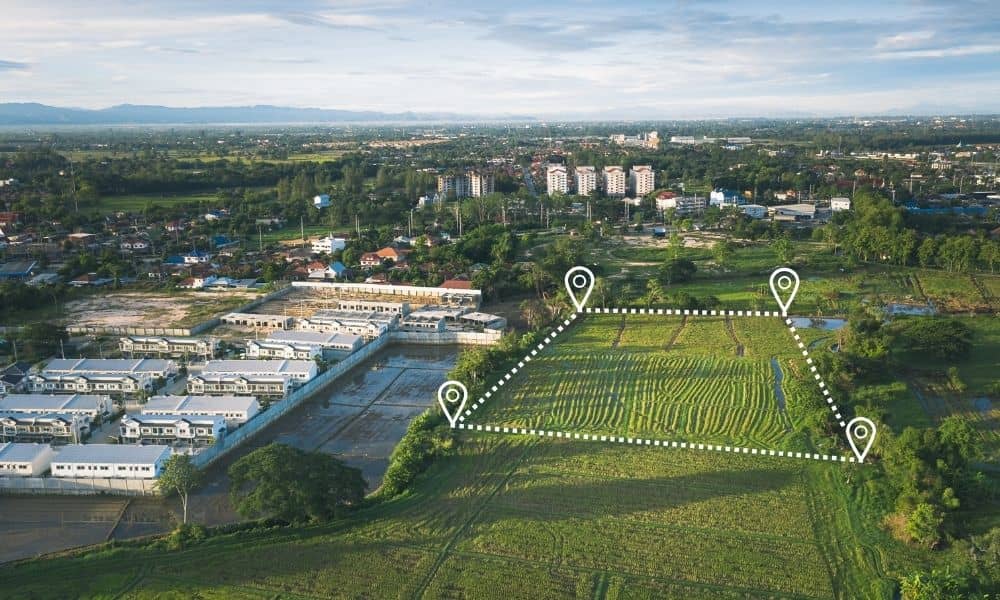
If you’ve ever tried to find property lines, you already know how frustrating the process can feel. What starts as a simple question often turns into hours of searching, comparing maps, and second-guessing what you see.
Many homeowners expect a clear answer. Instead, they find conflicting information, unclear boundaries, and growing stress. So why does this keep happening? More importantly, what actually works?
Why so many homeowners feel stuck
Homeowners across Fort Myers run into the same problem again and again. They want to put up a fence, build an addition, or settle a question with a neighbor. Naturally, they look online first.
They check county maps. Then they look at Google Maps. Sometimes they even ask a neighbor where the line is. Unfortunately, none of those sources agree.
Because of that, many people feel unsure about moving forward. They worry about building in the wrong spot or creating a dispute. That’s why so many homeowners look for ways to find their property lines in Fort Myers before starting any project.
Why property lines are harder to identify
Fort Myers presents unique challenges. First, the area has a mix of older neighborhoods and newer developments. Some properties were created decades ago using older records and methods. Others were built quickly during growth periods.
On top of that, hurricanes changed the landscape. Over time, fences shifted, trees disappeared, and visible markers moved. Even though the land looks stable today, many physical clues no longer match legal boundaries.
In addition, canals, flood zones, and coastal features complicate things even more. Because of all this, property lines often feel unclear, even to careful homeowners.
Common mistakes homeowners make
Most homeowners start with online maps, which makes sense. County GIS maps look official. However, they only show approximate boundary lines. They do not define legal property limits.
Next, many people trust existing fences. Unfortunately, fences often sit off the true boundary. Previous owners may have placed them based on convenience, not accuracy.
Others rely on deed sketches. While deeds matter, they do not replace on-site measurements. A sketch alone cannot show you exactly where your property begins and ends.
Each of these steps feels logical. Still, they rarely solve the problem.
Why online tools don’t give clear answers
Online maps help with planning and taxes. They do not establish property boundaries. Even small distortions in aerial images can shift lines by several feet.
Because of that, two different maps may show two different boundaries for the same property. Homeowners then assume someone made a mistake. In reality, those tools were never designed for accuracy at ground level.
So when homeowners try to find property lines using online tools alone, confusion usually follows.
Why neighbors often disagree about boundaries
Disagreements between neighbors happen more often than people admit. In many cases, both sides believe they are right.
One neighbor might rely on an old marker. Another might trust an online map. Without verified measurements, both views feel valid.
As a result, tension builds. Projects get delayed. Conversations turn uncomfortable. In some cases, the issue escalates further than anyone expected.
Fortunately, there is a reliable way to prevent this.
What actually works when locating property lines
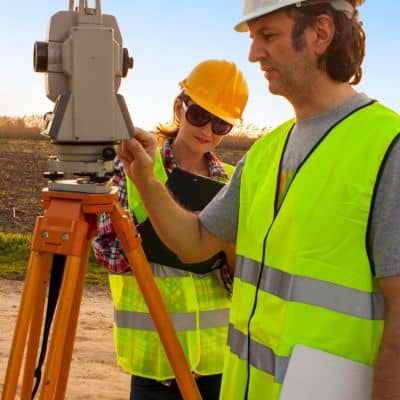
The only dependable solution involves a boundary survey completed by a licensed land surveyor.
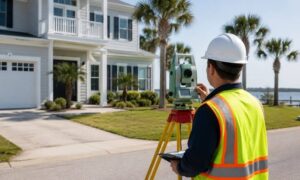
A professional surveyor does more than measure. They review historical records, plats, and prior surveys. Then they verify property corners using precise equipment and accepted standards.
Because of that process, the results hold legal weight. Cities, lenders, and courts recognize them. Neighbors also respect them because the boundaries are properly documented.
Once the survey is complete, the guesswork stops. You know where you can build. You know where fences belong. Most importantly, you gain confidence.
When it’s time to stop guessing
Some homeowners delay getting help because they hope the answer will become clear. Often, it doesn’t.
You should consider professional support if you plan to:
- Install a fence or wall
- Build an addition, pool, or driveway
- Resolve a property dispute
- Sell or refinance your home
- Apply for permits
In these situations, accuracy matters. A small mistake can turn into a costly problem later.
That’s why many people who try to find their property lines eventually realize that clarity beats guessing.
Why this issue keeps coming up
Property boundaries are legal, not visual. They don’t show themselves clearly on the ground. Online tools simplify reality, but land ownership doesn’t work that way.
At the same time, Fort Myers adds layers of complexity through storms, redevelopment, and water features. Confusion doesn’t mean something is wrong with your property. It means the situation requires professional verification.
Final thoughts
Trying to locate your property lines on your own feels reasonable. Still, frustration often follows. Maps conflict. Neighbors disagree. Stress builds.
Real clarity comes from verified measurements and proper documentation. That approach protects your property, your investment, and your peace of mind.
If you’ve struggled to find property lines, you’re not alone. Fortunately, there is a proven way forward—and it starts with accurate information you can trust.