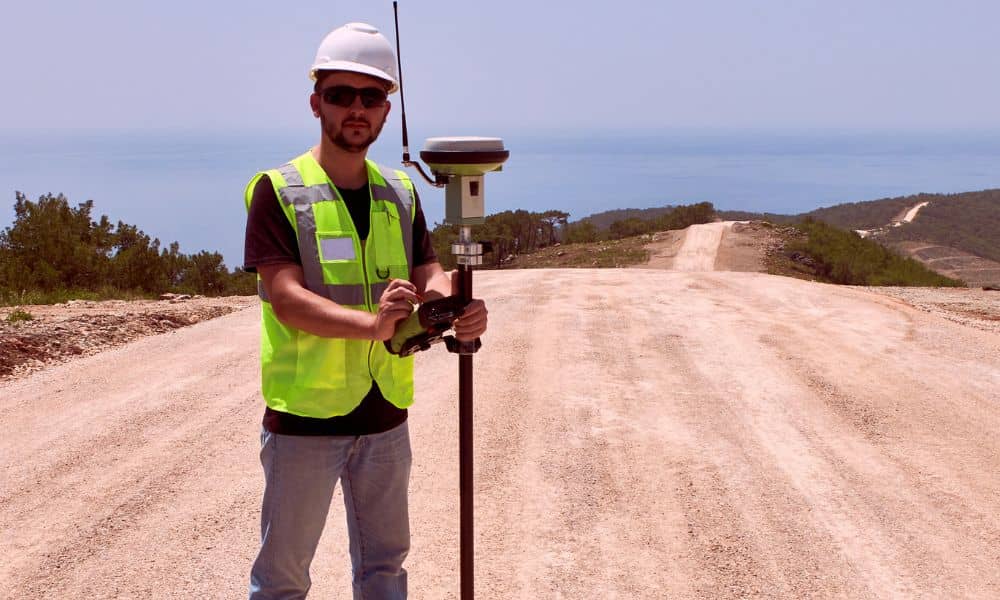
Recently, reports warned about temporary GPS signal problems in parts of the Southeast. Most people only saw small glitches on their phones. However, professionals paid attention. Even small GPS shifts can cause big problems when exact measurements matter. That’s why a land surveyor does not rely on GPS alone.
Many people think surveyors just use GPS to find property lines. However, that idea is too simple. In truth, GPS is only one tool in a larger system of checks. When signals become unstable, professionals adjust right away.
GPS technology has improved surveying. It helps crews measure land quickly and with strong accuracy. Under normal conditions, survey-grade equipment can measure within tiny fractions of an inch.
However, GPS depends on satellites. When something interferes with those signals — such as weather changes, testing activity, or signal crowding — accuracy can drift. The device may still show a position, but that position may shift slightly.
For daily navigation, that small shift may not matter. If your phone moves you a few feet on a map, you may not notice. On a property survey, though, a few feet can lead to serious money problems.
Therefore, a professional land surveyor never assumes GPS is perfect.
Navigation GPS vs. Professional Survey Equipment
First, let’s clear up a common misunderstanding.
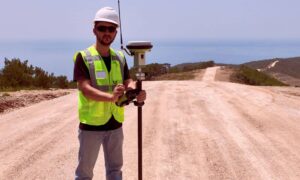
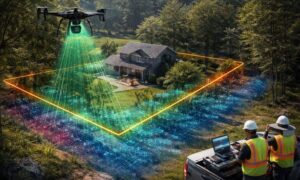
Your phone uses basic GPS signals. A land surveyor uses advanced equipment that connects to several satellite systems and correction networks. This equipment improves accuracy greatly.
Even so, survey-grade systems can still face short periods of instability.
The key difference is verification.
Unlike a phone, a land surveyor never accepts one reading as final. Instead, they measure, re-measure, and confirm each important point. GPS collects data, but the surveyor checks that the data meets strict standards.
In other words, GPS begins the work — it does not finish it.
What Happens During Signal Disruptions?
When GPS signals weaken or drift, a few things can happen:
- Positions may “float” instead of locking in place.
- Measurements may shift over time.
- Correction signals may delay or drop.
- Satellite patterns may weaken.
Even if the device looks active, the accuracy may not meet professional standards.
Because of this, a trained land surveyor watches accuracy indicators all the time. If the numbers show instability, the crew changes methods quickly. That fast action protects your project from hidden errors.
How a Land Surveyor Confirms Accuracy
So what does a professional do differently?
First, surveyors take redundant measurements. They measure the same point more than once. If the numbers do not match, they check again. Matching results builds trust.
Next, crews connect to known control points. These fixed reference spots act like anchors. If new measurements do not line up with them, something needs correction.
In addition, surveyors often measure in a loop and return to where they started. If the math does not “close,” the system shows an error. This method finds mistakes that one reading might miss.
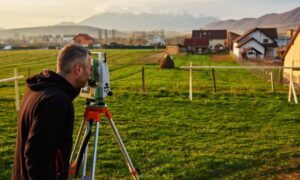
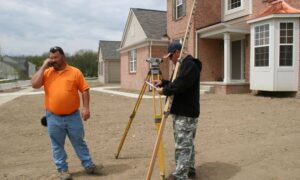
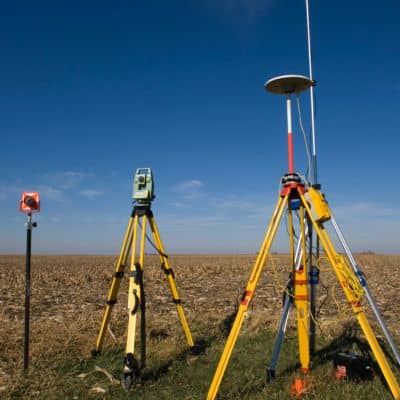
When GPS signals weaken, crews also use tools called total stations. These optical tools measure angles and distances from the ground. They do not rely on satellites. This backup keeps the project moving while protecting accuracy.
Finally, after fieldwork ends, surveyors review reports and accuracy checks before finishing the job. Only when the data meets strict standards does the land surveyor complete the work.
Why Small Errors Matter More Than You Think
You may wonder if a few inches really matter.
In construction and development, they do.
Building layout needs tight alignment. Foundations must sit in the correct place. Structural columns must match the plans exactly. Commercial projects depend on exact measurements for inspections.
Even small shifts can cause costly rework.
For example, if staking for concrete sits slightly off, crews may need to adjust forms, materials, or schedules. That delay costs time and money.
Therefore, hiring an experienced land surveyor gives you real protection.
Jacksonville Conditions Add Extra Complexity
Local conditions also affect accuracy.
Heavy tree cover in some neighborhoods can block satellite signals. Tall buildings can cause signals to bounce. Military and aviation activity in North Florida may affect regional GPS stability. Also, coastal humidity and weather changes can affect signal clarity.
Because of these factors, local experience matters. A land surveyor knows when to adjust and when to use other tools.
Technology alone cannot solve these issues. Professional judgment can.
Technology Plus Training Creates Real Protection
Modern GPS equipment looks impressive. However, equipment alone does not protect your investment.
Training, experience, and professional standards provide real protection.
A licensed land surveyor studies measurement science and error detection. This training helps them find problems early.
While GPS gathers coordinates, the surveyor checks whether those numbers make sense. They cross-check data, confirm limits, and document verification steps.
In short, the equipment collects information. The land surveyor confirms it.
When Accuracy Should Be Your Top Priority
Accuracy matters most when you plan:
- Commercial construction
- Land development
- Property division
- Permanent structures
- High-value real estate projects
In each case, precision affects cost, safety, and long-term results.
Although signal problems may not happen every day, preparation must happen every day. A professional land surveyor builds verification into every project.
Precision Is More Than a Satellite Signal
It is easy to think modern tools handle everything. However, professional surveying still depends on skill and verification.
A land surveyor uses GPS — but never blindly.
Instead, they confirm, cross-check, adjust, and verify. They combine satellite data with ground-based tools. They build backup steps into each project. Most importantly, they protect clients from hidden risk.
If your project depends on exact measurements, do not rely on one signal alone.
Work with a trusted land surveyor who understands both the technology and the responsibility behind it. When precision matters, verification makes the difference.