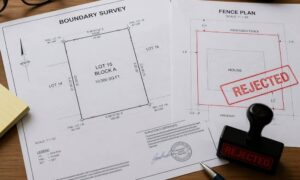
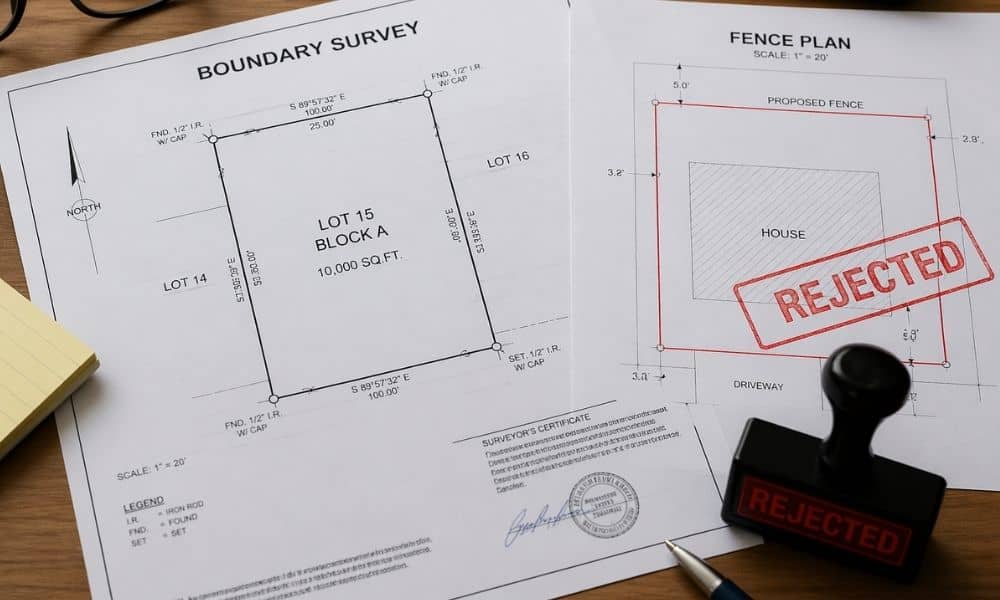
You send in your fence permit. Everything looks fine. Then the city sends it back. Rejected. Most people think the fence design caused the problem. That’s usually not the case. A lot of the time, the issue comes from the paperwork you submitted, especially the property surveys attached to the application that don’t quite match your fence plan.
That’s where it gets frustrating. You already paid for the survey. You already planned the layout. Still, the city won’t approve it.
In Coral Springs, this happens more often than people expect. Once you understand why property surveys get rejected, it becomes much easier to fix the issue and move forward without more delays.
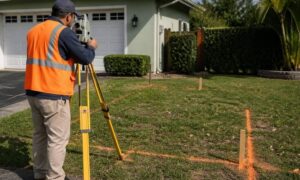
Why Coral Springs Reviews Property Surveys So Closely
Fence permits are not just about the fence. The city cares about where the fence sits on your land.
That means they need clear proof of your property lines. They also need to see that your fence stays inside those lines and does not cross into restricted areas.
This is where property surveys come in. They act as the official record of your lot. If anything looks off, the city won’t take the risk. They will stop the permit and send it back for changes.
Because of that, even a small mistake on a survey can slow everything down.
Where Property Surveys Usually Go Wrong
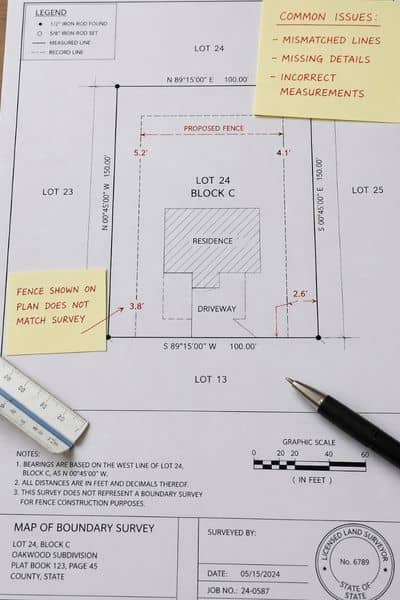
Most rejected permits trace back to simple issues. The problem is not always obvious at first.
One of the biggest issues comes from mismatched plans. A homeowner draws a fence layout, then submits it with property surveys that show a slightly different position. Even a small shift can cause a rejection. The city checks both documents together. If they don’t line up, the permit stops right there.
Another common issue is missing detail. Some property surveys look clean at a glance, but key information is hard to find. Lines may not be labeled clearly. Measurements may be faint or incomplete. When a reviewer can’t read the survey with confidence, they won’t approve it.
Old surveys also cause trouble. A property may have changed over time. Maybe a structure was added. Maybe something moved. If the survey does not reflect the current setup, the city sees a mismatch between paper and reality.
Then there is the issue of file quality. Many rejections happen because the survey file is hard to read. Blurry scans, cut edges, and faint numbers make it difficult for reviewers to do their job. Instead of guessing, they reject the application.
What a Rejection Actually Does to Your Project
A rejected permit does more than delay paperwork. It affects the whole project.
First, the timeline stretches. You fix the issue, then resubmit, then wait again. What should have taken a few days can turn into weeks.
At the same time, contractors may pause work. Some won’t schedule anything until the permit clears. That can push your project further back.
Costs can also rise. You might need to update your property surveys or pay for revisions. Small mistakes at the start can turn into extra expenses later.
That’s why it helps to fix the root problem early.
How to Fix a Property Survey That Got Rejected
The fastest way to move forward is to focus on the exact reason for the rejection.
Start with the notes from the city. They usually point out what needs to change. Sometimes it’s a mismatch between the fence layout and the survey. Other times it’s missing information or poor clarity.
Once you know the issue, adjust your documents so everything lines up. Your fence plan should match the property surveys exactly. No guessing, no rough placement.
If the problem comes from readability, fix the file. Use a clear copy with visible measurements and complete edges. A clean document makes a big difference during review.
In some cases, the survey itself needs an update. If it no longer reflects the current property, trying to reuse it will only lead to more delays. Getting an updated version can save time.
Working with a surveyor at this stage also helps. They can review the documents and catch anything that might cause another rejection. That way, you fix everything in one step instead of going back and forth.
How to Avoid Property Survey Problems Before You Apply
Many issues start with the order of steps. People design the fence first, then check the survey later.
That approach leads to problems.
It works better to start with the property surveys. Once you know the exact layout of your land, you can design the fence to match it. This keeps both documents aligned from the start.
It also helps to make sure everyone uses the same information. If your contractor works from a different plan than what you submit, mistakes can happen.
Taking a little time to review everything before sending it in can prevent a rejection.
When a New Property Survey Makes More Sense
Sometimes fixing the old survey is not the best option.
If the survey is outdated or missing key details, updating it piece by piece can take longer than starting fresh. The same goes for cases where the property has changed since the last survey.
If you already faced more than one rejection, it may be time to replace the survey. A new one gives you a clean, accurate starting point.
That can move your permit forward faster and reduce stress.
Moving Forward Without More Delays
Fence permits in Coral Springs often get held up for one reason: property surveys that don’t meet review standards.
The fence itself is rarely the issue. The paperwork is.
Once you fix the survey, the process becomes much smoother. Approval takes less time, and your project can move ahead without more stops.
If you’re dealing with a rejection or planning a fence, focus on getting your property surveys right early. That single step can save you time, money, and a lot of frustration.