
When it comes to buying or refinancing commercial property in Florida, one of the most important steps in due diligence is ordering an ALTA survey. This detailed land survey, guided by national standards, plays a key role in identifying risks and ensuring all parties understand exactly what’s being purchased.
Whether you’re dealing with beachfront real estate in Miami, urban properties in Tampa, or commercial developments in Orlando, using professional ALTA survey services helps prevent legal and financial surprises later.
What an ALTA Survey Covers
An ALTA (American Land Title Association) survey provides more detail than a standard boundary survey. It includes:
- Property boundaries and building locations
- Easements, encroachments, and rights-of-way
- Access points and adjoining roadways
- Utility locations and visible improvements
- Zoning classifications (if requested via Table A)
These surveys are often required by lenders and title companies to protect against future title issues and confirm the property’s legal and physical status.
Why It’s Required in Commercial Deals
In Florida, lenders and title insurers typically require an ALTA/NSPS Land Title Survey as part of thorough commercial property due diligence before closing a deal. Here’s why:
- Lenders want assurance that no boundary or legal issues exist
- Title companies use the survey to remove or insure against certain exceptions
- Buyers and developers use it to identify any limitations on use, access, or expansion
Skipping this step could leave a property owner vulnerable to disputes over access, boundary lines, or use restrictions.
Common Problems ALTA Surveys Help Prevent
Florida’s mix of coastal, urban, and agricultural land comes with complex land use challenges. ALTA surveys help uncover:
- Neighboring structures that encroach onto the subject property
- Inaccurate legal descriptions or deeds
- Missing or undocumented access easements
- Utility line issues or zoning conflicts
This information protects buyers from taking on properties that can’t be legally developed or financed as planned.
Avoiding Costly Delays and Legal Disputes
In Florida, failure to identify a setback or easement violation can stall a construction permit or trigger legal action. ALTA surveys give legal teams, engineers, and financial institutions the data they need to move forward with confidence.
Ordering a land title survey for lenders and buyers early in the process helps resolve title exceptions and avoid last-minute delays at closing.
The Cost of Skipping an ALTA Survey
Not ordering an ALTA survey might seem like a cost-saving move, but it can result in:
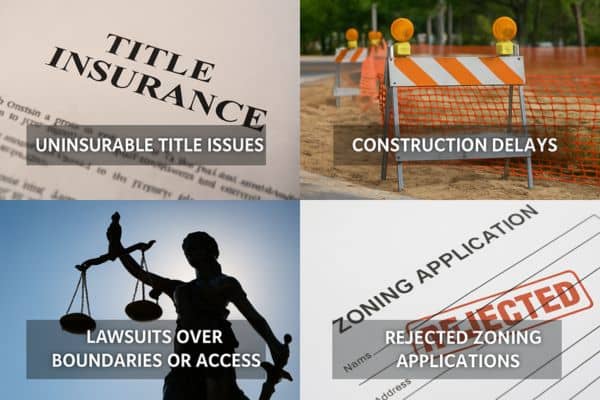
- Uninsurable title issues
- Construction delays due to unknown encroachments
- Lawsuits over property boundaries or access
- Rejected zoning applications or permitting complications
In Florida, where land use regulations can vary widely by county, the risks are especially high for coastal and redevelopment properties.
Frequently Asked Questions
1. What’s the difference between an ALTA survey and a boundary survey?
An ALTA survey includes everything a boundary survey does, plus details required by lenders and title insurers, such as easements, utilities, and Table A items.
2. Who pays for the ALTA survey in Florida?
Typically, the buyer or borrower pays for the survey, although this can be negotiated in the contract.
3. Do I need an ALTA survey if I’m refinancing a commercial property?
Yes. Most lenders will require a current ALTA survey to ensure there have been no changes to the property or its legal conditions.
4. Can I reuse an ALTA survey from a previous transaction?
Not always. Surveys must be current and meet the lender or title company’s standards, especially if site conditions have changed.
5. How long does an ALTA survey take in Florida?
Depending on the size and complexity of the property, ALTA surveys in Florida can take anywhere from 1 to 4 weeks.